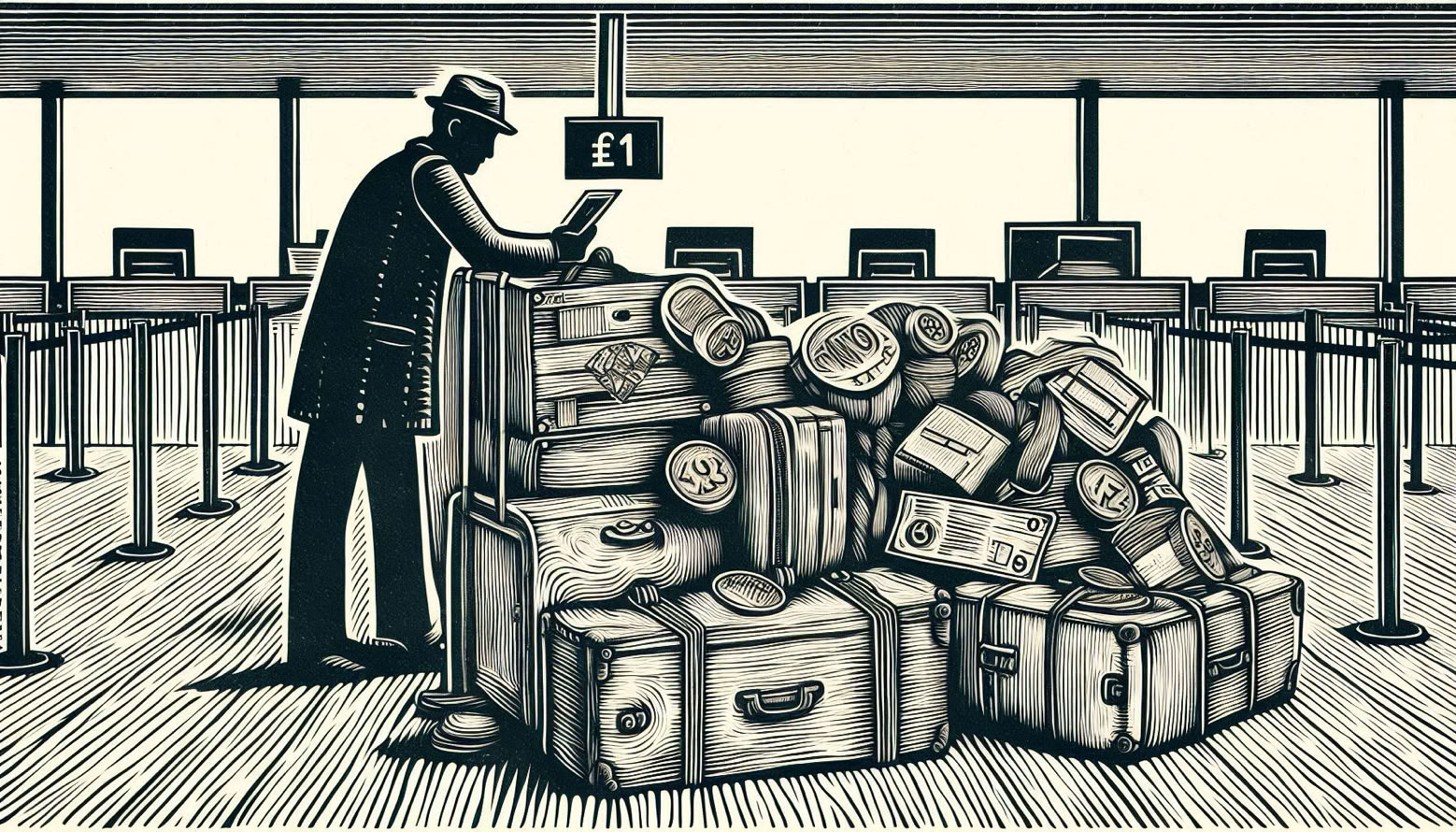
You know you're carrying it. You can feel the weight of it, even if you can't always name what "it" is. Old hurt that won't heal. Shame that surfaces at random moments. Resentment you thought you'd dealt with but keeps bubbling back up. Beliefs about yourself that you know aren't true but can't seem to shake.
People tell you to "let it go." To "move on." To "stop dwelling on the past." As if it's that simple. As if you're choosing to carry this weight. As if you haven't been trying to put it down for months, maybe years.
What they don't understand is that emotional baggage isn't something you're consciously holding onto. It's something your brain has filed away as essential survival information. And your brain doesn't let go of survival information easily.
Let me explain why you're still carrying it, and more importantly, how to actually release it.
What Emotional Baggage Actually Is
Emotional baggage isn't just "bad memories" or "things that happened in the past." It's unprocessed emotional experiences that your brain has stored as warnings. Events, relationships, or patterns that taught your nervous system: "This is dangerous. Remember this. Never let this happen again."
These experiences get stored in your amygdala, the part of your brain responsible for detecting threats and triggering your fight-flight-freeze response. Ironically, it was designed to keep you alive when genuine physical threats (sabre-toothed tigers, rival tribes, predators) were a daily concern. It's brilliant at survival. It remembers every threat, every danger, every time you were hurt or scared. And it never forgets.
So when something reminds your amygdala of a past threat, even vaguely, it fires up your entire nervous system as if the threat is happening right now. Your heart races. Your chest tightens. Panic floods in. Not because you're overreacting, but because your amygdala is doing exactly what it's designed to do: keep you alive.
The problem? Your amygdala can't tell the difference between:
An actual sabre-toothed tiger
A toxic ex
A critical parent
A humiliating experience
A betrayal from years ago
To your amygdala, they're all filed under "DANGER: AVOID AT ALL COSTS." This is your emotional baggage. Not the memory itself, but the survival response still attached to it.
Why You Can't Just "Let It Go"
When people tell you to let go of the past, they're operating under the assumption that you're consciously choosing to hold onto it. You're not. Your amygdala has decided this information is crucial to your survival. It's keeping that baggage front and centre because it believes it's protecting you.
Every time something triggers that old wound, your amygdala is essentially saying: "Remember this! This is important! Don't let your guard down!" It's not trying to torture you. It's trying to save you from experiencing that pain again. The cruel irony is this: by keeping you hypervigilant to past threats, your amygdala keeps you stuck in patterns that create new pain.
What Baggage Looks Like in Real Life
Emotional baggage isn't abstract. It shows up in specific, concrete ways.
Overreacting to situations that don't warrant it. Someone makes an innocent comment and you're suddenly flooded with rage or hurt. Not because of what they said, but because your amygdala just connected it to something from your past.
Avoiding anything that resembles past pain. You don't pursue opportunities because they vaguely remind you of when you failed before. You don't date because your amygdala has filed all romantic relationships under "dangerous."
Expecting the worst.You brace for betrayal, disappointment, rejection before it even happens. Not because you're pessimistic, but because your amygdala is trying to protect you from being blindsided again.
Feeling emotions that don't match the situation. You feel intense shame about something minor. Or guilt about setting a boundary. Or fear about something objectively safe. Your amygdala is reacting to old baggage, not present reality.
Being unable to trust yourself or others. Your amygdala remembers when trust led to pain. So it keeps you suspicious, guarded, waiting for the other shoe to drop.
Staying stuck in self-destructive patterns. You know the relationship isn't healthy, the job is draining you, the habit is harmful. But your amygdala has decided that staying in the familiar, even if painful, is safer than risking the unknown.
This is what carrying baggage does. It hijacks your present with your past.
The Baggage You Don't Even Know You're Carrying
Some emotional baggage is obvious. You know exactly where it came from and why it affects you. But some baggage is more insidious. It's been with you so long, integrated so deeply, that you don't even recognise it as baggage anymore. You think it's just who you are.
Beliefs like:
"I'm not good enough"
"People always leave"
"I have to work twice as hard to deserve anything"
"Asking for help makes me weak"
"My feelings don't matter as much as other people's"
These aren't truths about you. They're baggage. Survival strategies you developed based on experiences that taught you these things were necessary to stay safe, to be loved, to avoid pain. Your amygdala filed them under "essential information for survival" and they've been running in the background ever since, shaping every decision, every relationship, every opportunity you take or avoid.
Why Carrying Baggage Exhausts You
Imagine physically carrying a heavy backpack everywhere you go. Initially, you'd notice the weight. But over time, you'd adapt. Your muscles would compensate. You'd forget you're even carrying it. Until you try to run. Or climb stairs. Or dance. Or do anything that requires freedom of movement. Then you'd feel the weight. The exhaustion. The limitation.
Emotional baggage works the same way. You've been carrying it so long you've adapted. But it's still there, weighing you down, limiting what you can do, exhausting you in ways you don't even register.
It takes enormous energy to stay hypervigilant to threats that aren't actually present, to suppress emotions your amygdala keeps triggering, to maintain the protective walls you built years ago, to fight against your own needs and desires because your amygdala says they're dangerous, and to keep replaying old scenarios, trying to make sense of them, searching for closure.
No wonder you're tired. You're not just living your present life. You're carrying your entire past with you.
How Baggage Gets Released (Not Just "Dealt With")
You can't think your way out of emotional baggage. Your amygdala doesn't respond to logic. It responds to felt safety. Releasing baggage isn't about understanding why you're carrying it (though that can help). It's about updating the survival information stored in your amygdala so it stops treating old wounds as current threats.
1. Recognise What You're Carrying
You can't release what you haven't acknowledged. Name the baggage. Be specific. "I'm still carrying shame from when I was humiliated in school." "I'm carrying the belief that I'm not loveable because my parent was emotionally unavailable." "I'm carrying resentment towards my ex for betraying me." Just naming it starts to separate you from it. It's something you're carrying, not something you are.
2. Understand It's a Survival Response
Your amygdala stored this baggage because at the time, it helped you survive. It protected you. It kept you safe. Acknowledge that it served a purpose. And then recognise: you don't need this protection anymore. The threat has passed. The situation is over. You're safe now.
3. Calm the Amygdala
Your amygdala can't release baggage whilst it's in fight-flight-freeze mode. You need to signal safety to your nervous system first. This is where techniques like breathwork, grounding, and hypnotherapy become essential. They reduce the sense of threat or change the programming so you can pause and allow change to happen, in this case letting go of all that stuff that has kept you stuck. When your nervous system feels safe, your amygdala can finally update its files. It can reclassify old threats as "no longer relevant."
EFT, Emotional Freedom Technique, works particularly well here. Tapping on specific points on the face and body while focusing on the memory or feeling you're trying to release sends a direct calming signal to the amygdala, reducing the emotional charge stored alongside the memory. Research has shown it produces measurable reductions in cortisol, and that matters because it tells you something important: EFT isn't just changing how you think about what happened, it's changing the physiological response still attached to it.
If you'd like a guided way into that, the train visualisation audio can help you begin to release the emotional charge from stored memories:you can find it here.
4. Reprocess the Experience
Your amygdala stores baggage as fragmented, emotionally charged memories. They're not processed as complete experiences with a beginning, middle, and end. They're frozen moments of pain, fear, or shame. Hypnotherapy helps reprocess these fragments. Not by forcing you to relive the trauma, but by allowing your subconscious mind to integrate the experience in a way that removes its emotional charge. The memory doesn't disappear. But the survival response attached to it does.
5. Install New Information
Once the old baggage is released, there's room for something new. New beliefs. New responses. New patterns. Instead of "people always leave," your amygdala learns "some people left, some people stayed, and I survived both." Instead of "I'm not good enough," it learns "I am enough, and past experiences that suggested otherwise were about them, not me." This isn't positive thinking. It's updating the survival information so your amygdala stops sabotaging you with outdated warnings.
What Happens When You Release Baggage
The shift is often subtle at first. You might not notice the exact moment the baggage lifts. But gradually, you realise: that trigger doesn't affect you the way it used to. You're not bracing for disaster constantly. You can be in similar situations without panic flooding in. The shame, resentment, or fear has faded to something neutral. You have energy you didn't have before. You're making choices based on what you want, not what your amygdala fears.
I don't know whether it'll be in a week, a month, or a year, but one day you'll suddenly realise: you're not carrying it anymore. The weight has lifted. And you didn't even notice the exact moment when you put it down.
The Work of Letting Go
Releasing emotional baggage isn't something you do alone through sheer willpower. Your amygdala is too powerful, too deeply wired, too committed to keeping you "safe" in ways that no longer serve you. Hypnotherapy and EFT work directly with your subconscious mind and your amygdala to identify what baggage you're carrying, understand why it's still there, calm the nervous system enough to release it, reprocess the experiences so they lose their emotional charge, and update the survival information with new, healthier patterns.
The baggage you've been carrying isn't your fault. You didn't choose it. Your amygdala stored it because it was trying to protect you. But you can choose to release it. To finally put down the weight you've been carrying. To update your amygdala's files so it stops treating your past as your present.
You deserve to move through life without the constant weight of old pain. Without your nervous system screaming warnings about threats that no longer exist. The baggage can be released. You don't have to carry it forever.
Want to Become a Master of Your Mind?
Sign up to my monthly newsletter and receive advice on tackling the thoughts and patterns that keep you stuck, overwhelmed, or trapped in your head, a simple toolkit of things to try, and a guided self-hypnosis audio to help you reset and release the friction in your mind.
If you're at the point when you've tried talking it out, friends and loved ones glaze over when it rears its ugly head again, and you're sick of carrying the weight, then let me help you. Get in touch to book a free consultation.