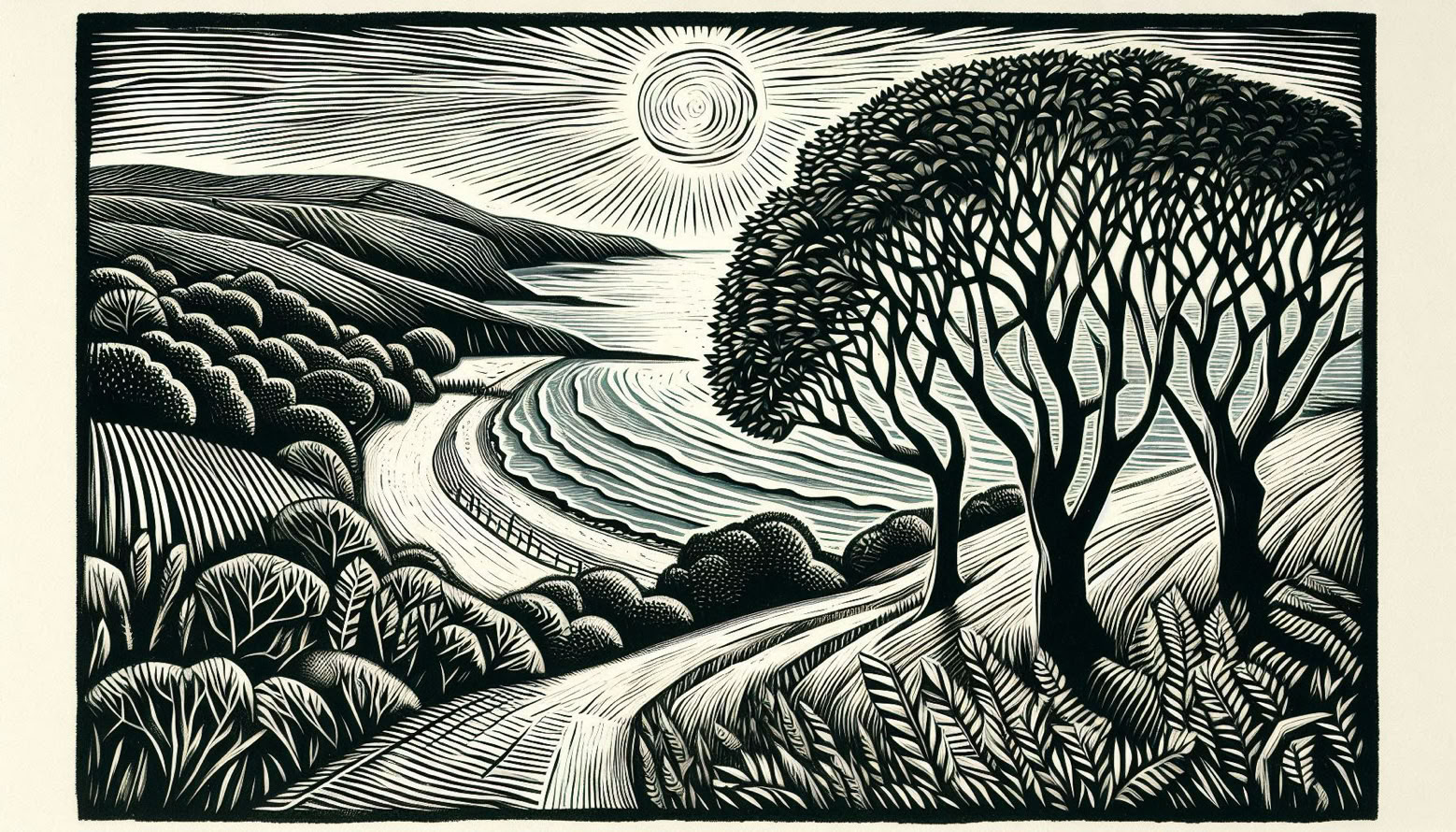
You're in a guided session. I'm talking about a garden, seeds, weeds, clearing space for growth. And part of your mind is quietly thinking: what has this got to do with anything? You came here with a specific problem. You wanted practical tools.
While that part of your mind is questioning the metaphor, another part is doing something entirely different. It's absorbing the pattern, drawing connections you haven't consciously made yet, working on a solution to a problem you may not even have fully articulated. Your subconscious doesn't operate in logic and language. It operates in story, symbol, and image. And that's not a limitation. It's the reason metaphor works at all.
Your conscious mind is brilliant, and limited
The part of you reading this right now is processing roughly 40 to 50 bits of information per second. It's analytical, sequential, and very good at fitting things into neat categories. It's also easily distracted and, quite often, the first thing to put up resistance when someone suggests change.
Your subconscious mind is processing something closer to 11 million bits per second. It's running your heartbeat, your breathing, your digestion, your emotional responses, your memory associations, and hundreds of other processes you'll never consciously notice. And it doesn't think in words. It thinks in images, feelings, and patterns.
This is why telling yourself "stop being anxious" doesn't work. The conscious instruction is understood perfectly. But the subconscious, which is actually generating the response, doesn't receive it. It's not speaking that language. Tell it a story about a tree bending in a storm without breaking, about waves that rise and fall without resistance, about a river that finds its way around rocks? That it understands immediately.
Why metaphors bypass resistance
When I say directly "you need to release your emotional baggage," your logical mind springs into action. How? What if I can't? What if I'm not ready? The defences are up before the idea has landed anywhere useful.
But tell a story about someone on a long walk who realises, halfway up a hill, that the pack on their back is heavier than it needs to be, that some of what they've been carrying doesn't actually need to come along, that the rest of the journey would feel different if they set it down... and your subconscious doesn't argue. It doesn't need proof or steps or guarantees. It simply absorbs the possibility: oh. That's an option.
The metaphor gets past the critical filter because it's not a direct instruction. It's just a story. Your logical mind doesn't feel threatened by it. Your subconscious, meanwhile, is already working with it.
Why "irrelevant" stories often work best
Something I see in sessions fairly regularly: I'll tell a story that appears to have nothing to do with what the person came in for. Someone dealing with anxiety hears about a river finding its way around rocks. Someone stuck in a pattern of perfectionism hears about Japanese pottery that deliberately includes imperfection. And afterwards, they say something like: I can't explain it, but something feels different.
Whilst the conscious mind was occupied wondering what rivers have to do with anxiety, another part was absorbing the pattern. Obstacles don't have to stop progress. You can adapt. You can flow around things rather than forcing your way through.
The story doesn't have to be obviously relevant for that translation to happen. In fact, when the connection is too direct, the critical mind sometimes catches it and starts analysing. A more oblique metaphor can get further, faster, because there's nothing to push against.
What your subconscious is actually doing
Take that garden metaphor. Weeds crowding out seedlings. Gently pulling them back to make space. Your conscious mind might find it pleasant but abstract. Your subconscious, in the same moment, is making a very specific set of translations. Weeds as old thought patterns. Seedlings as the changes you've already begun. The act of pulling as release rather than force. The word "gently" as information: this doesn't have to be a fight.
Two people can hear the same metaphor and their minds will translate it differently, applying it to their own specific circumstances without any conscious direction. That's what makes metaphor so effective. It's personalised without needing to be specific.
The language your subconscious already speaks
Think about your dreams. They're rarely literal. You're being chased, or you've lost your teeth, or you're back in a school corridor unable to find your classroom. Consciously, it makes no sense. But your subconscious has been communicating in symbol and image your entire life. Every gut feeling, every intuition that turned out to be right, every time you woke from a dream with a strange clarity about something, that was this part of your mind doing what it does.
Hypnotherapy doesn't introduce a new language. It uses the one already running. When I guide you through a forest, your subconscious translates that into something meaningful for you specifically, in ways I don't need to explain and you don't need to consciously decode. It already knows.
Nature imagery works particularly well for this, and not simply because it's soothing. We evolved in natural environments. Your subconscious recognises patterns like seeds and growth, storms and resilience, tides and rhythm, at something close to a cellular level. This is why a single image of a tree standing through a storm can do more than an hour spent logically analysing the concept of resilience. The subconscious already understands what the tree knows. It doesn't need the explanation.
Change without force
Working with metaphor, change happens without resistance, because you're not fighting anything. When you try to shift something through willpower alone, you're pushing against subconscious programming that has been in place, in some cases, for decades. The subconscious is stronger. It tends to win. But a metaphor doesn't fight. It offers a possibility, shows a pattern, presents an option. Your subconscious considers it, and if it recognises truth in it, something begins to move. Not because you decided it would, but because it did.
You often won't notice exactly when it changed. You'll simply realise at some point that something you used to react to doesn't land the same way anymore. That a pattern that felt fixed has loosened. That a belief you'd held for years doesn't feel quite as solid. That's the subconscious at work. It doesn't announce itself.
The story is the work
I know it can feel counterintuitive. You came with a specific problem and a reasonable expectation of concrete tools. And instead I'm talking about gardens and rivers and trees in storms. Your logical mind wants to understand exactly how this is helping.
The metaphor isn't a detour from the real work. It is the work. It's the most direct route to the part of your mind that's actually running the patterns you want to change. While you're listening to a story about a forest, your subconscious is making connections, finding options your conscious mind hadn't considered, and beginning to release patterns that no longer need to be there, without you having to consciously manage any of it.
Your only job is to listen. The rest is already happening.
Want to Become a Master of Your Mind?
Sign up to my monthly newsletter and receive advice on tackling the thoughts and patterns that keep you stuck, overwhelmed, or trapped in your head, a simple toolkit of things to try, and a guided self-hypnosis audio to help you reset and release the friction in your mind.