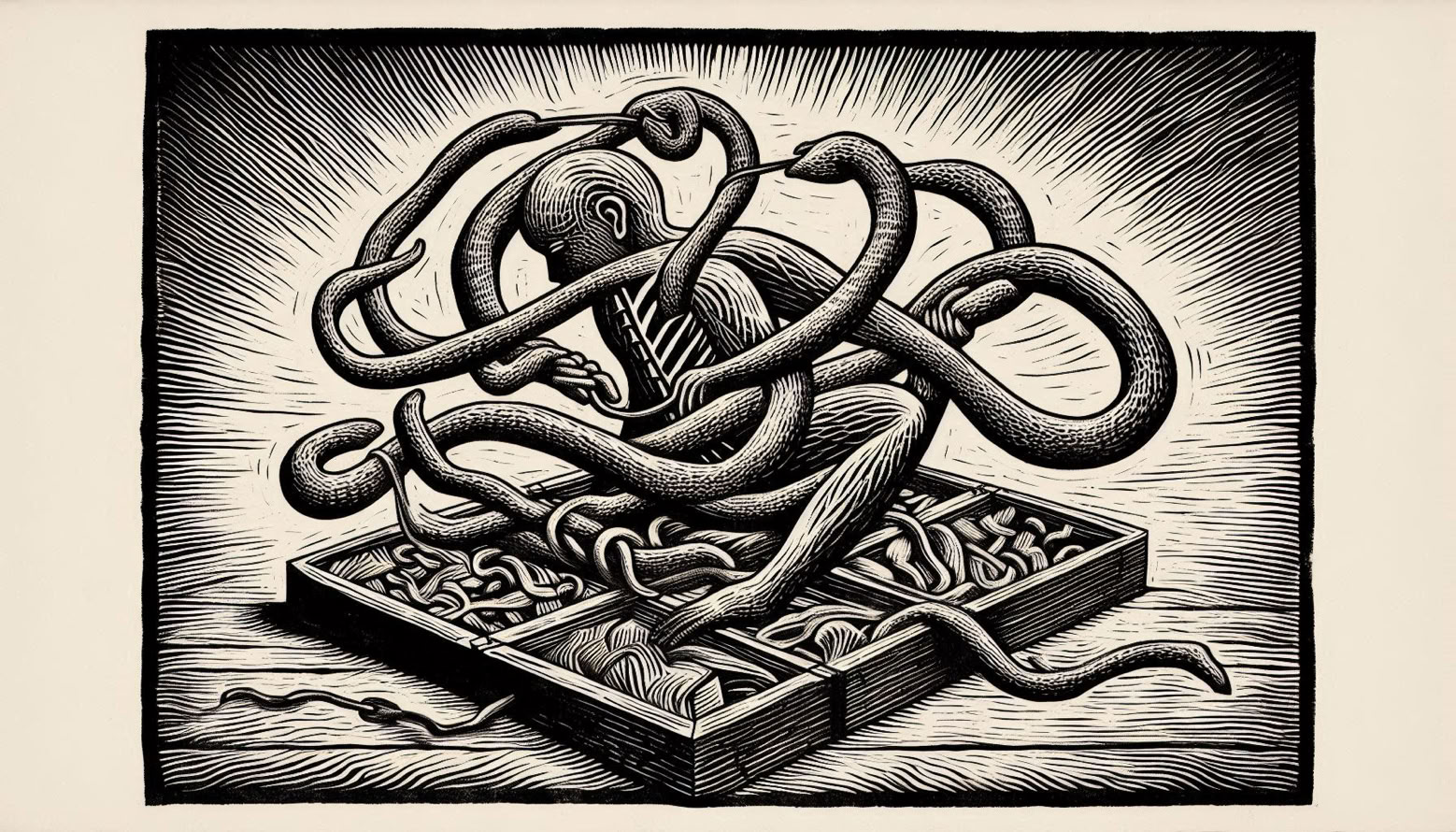
Do you second-guess every decision you make? Replay conversations for hours, analysing what you said, what you should have said, what they might have meant? Ask for other people's opinions even on the smallest choices because you're terrified of getting it wrong?
If you've been in a relationship with someone who gradually eroded your self-trust - whether that's a partner, parent, boss, or friend - you'll know this feeling intimately. The constant doubt. The paralysis. The exhausting mental gymnastics trying to figure out what the "right" answer is.
Here's what nobody tells you: that doubt isn't yours. It was planted there, cultivated over time, and watered with criticism until it took root so deep you can't remember what trusting yourself used to feel like.
But you can learn to trust yourself again. It takes work, but it's possible.
How Self-Trust Gets Destroyed
It rarely happens all at once. It's gradual. Insidious. So subtle you don't notice until you're already tangled up in it.
It might start with small comments:
"Are you sure that's a good idea?"
"I'm just trying to help you see things clearly"
"You're being too sensitive"
"That's not what happened"
Then it escalates:
Your memories are questioned
Your perceptions are dismissed as overreactions
Your judgement is consistently undermined
Your decisions are criticised until you stop making them
Eventually, you stop trusting your own mind. You defer to them. You ask permission. You apologise for things that aren't your fault. You've learned that your instincts are wrong, your feelings are invalid, and your version of reality can't be trusted.
This is what emotional manipulation does. It convinces you that the problem is you.
The Aftermath: When They're Gone But the Doubt Remains
Here's the cruel part: even after you've left the relationship, the damage lingers.
You're free from them, but you're not free from the patterns they installed. Your mind still runs their programme:
Decision paralysis: You can't choose what to eat for dinner without spiralling into anxiety. What if you pick wrong? What if there was a better option?
Constant self-monitoring: You replay every interaction, analysing your words, your tone, your facial expressions. Did you say the right thing? Did you come across badly?
Seeking external validation: You ask friends, family, even strangers for their opinion because you genuinely don't trust your own judgement anymore.
Apologising for existing: You say sorry constantly. For speaking. For having needs. For taking up space.
Hyper-responsibility: If something goes wrong, it must be your fault. You must have missed something, done something wrong, failed to see it coming.
These aren't character flaws. They're survival strategies your nervous system developed to keep you safe in an unsafe situation. The problem is, they're still running even though the threat has passed.
Why "Just Trust Yourself" Doesn't Work
People mean well when they say it. But if you could just trust yourself, you would. It's not a choice you're actively making.
Your subconscious mind learned that trusting yourself led to criticism, conflict, or emotional punishment. So it stopped. It built protective mechanisms to keep you from making "mistakes" - which really means it's trying to keep you from being hurt again.
Telling yourself to "just trust your gut" when your gut has been telling you lies for months or years doesn't work. Your instincts have been hijacked. You need to retrain them.
What Rebuilding Self-Trust Actually Looks Like
It's not about positive affirmations or pretending the damage didn't happen. It's about doing the work to repair what was broken.
Start With the Small Stuff
You're not going to wake up tomorrow trusting yourself on big life decisions. Start small.
Choose what you want for breakfast without asking anyone's opinion. Pick a film to watch based solely on what you fancy. Decide what to wear without second-guessing whether it's "appropriate."
These tiny decisions are practice runs. Each time you make a choice and the world doesn't fall apart, you're gathering evidence that you can trust yourself.
Notice When You're Asking for Permission
Pay attention to how often you're seeking external validation for your own feelings and choices.
"Is it okay if I..."
"Do you think I should..."
"Am I overreacting?"
You're allowed to have preferences. You're allowed to make choices. You don't need anyone's permission to feel what you feel or want what you want.
When you catch yourself asking for permission, pause. What would you choose if you didn't need approval?
Separate Their Voice from Yours
That critical voice in your head? The one telling you you're making a mistake, you're not good enough, you're doing it wrong?
It's probably not yours. It's theirs.
Start identifying when you're hearing their words in your head.
"You always overreact" - that's them.
"You're too sensitive" - also them.
"You can't do anything right" - definitely them.
Once you recognise it's their voice, you can start questioning it. Would you say that to someone you care about? No? Then why are you accepting it as truth about yourself?
Trust Your Body
Your mind might have been manipulated, but your body doesn't lie.
When something feels off, your body knows before your brain catches up. Tight chest. Knot in your stomach. Shoulders up around your ears. Jaw clenched.
Start paying attention to these signals. They're your early warning system, telling you when something isn't right. You might not be able to articulate why yet, but your body is giving you information.
The more you listen to these signals and act on them, the more you rebuild that connection between what you feel and what you know.
Give Yourself Permission to Get It Wrong
Here's something nobody tells you: trusting yourself doesn't mean you'll always be right.
You'll make mistakes. Choose the wrong thing sometimes. Misjudge situations. That's being human, not evidence that you can't trust yourself.
The goal isn't perfection. It's learning that you can handle being wrong without it destroying you. That making a mistake doesn't mean you're fundamentally broken or incapable of making decisions.
Every time you survive getting something "wrong," you prove to yourself that you're resilient enough to trust your judgement.
How Your Subconscious Keeps You Stuck
Your subconscious mind is trying to protect you. It learned that trusting yourself led to pain, so it's doing everything in its power to prevent that from happening again.
The problem? It's overprotective. It sees danger where there isn't any. It's still running old programmes designed for a threat that no longer exists.
This is where hypnotherapy becomes valuable. It allows you to work directly with your subconscious mind, to update those old programmes, and to help your nervous system understand that you're safe now. That you can trust yourself without everything falling apart.
Through hypnotherapy, we can:
Identify the specific beliefs that were installed ("I can't trust my judgement," "My feelings are wrong")
Trace them back to where they came from (they're not yours, they were planted)
Release the emotional charge attached to them
Install new, healthier patterns that actually serve you
The Role of Self-Awareness in Rebuilding Trust
You can't change what you can't see. Self-awareness is about getting honest about the patterns you're running.
When do you doubt yourself most? What triggers the spiral of second-guessing? Which situations make you feel like you need permission?
The more aware you become of these patterns, the more power you have to interrupt them. You start catching yourself in real-time: "There I go again, asking for validation I don't actually need."
Self-awareness isn't about judging yourself for these patterns. It's about recognising them as learned behaviours that you can unlearn.
What It Feels Like When Self-Trust Comes Back
It's not dramatic. There's no lightning bolt moment where suddenly everything clicks into place.
It's quieter than that.
One day you make a decision without agonising over it for hours. You say no without guilt consuming you. You trust your read on a situation and you're right. You choose something for yourself and you don't immediately regret it.
And here's what often happens with therapeutic work: I don't know whether it'll be in a week, a month, or a year, but you'll suddenly realise you haven't second-guessed yourself in ages. You haven't asked for permission or validation. You just... trusted yourself. And you didn't even notice the exact moment when that shift happened.
The mental noise gets quieter. The constant second-guessing starts to fade. You feel more solid, more grounded, more like yourself.
You start to recognise the difference between anxiety (which lies) and intuition (which tells the truth). You can tell when something genuinely doesn't feel right versus when you're just scared of getting it wrong.
And slowly, gradually, you remember what it feels like to trust yourself.
You're Not Broken
If you're reading this and relating to every word, please hear this: you're not broken. You're not damaged beyond repair. You're not weak for struggling with this.
What happened to you was real. The erosion of your self-trust was methodical and deliberate, even if the person doing it didn't fully realise what they were doing.
But it can be rebuilt. It takes time, patience, and often support - whether that's therapy, hypnotherapy, or working with someone who understands trauma and manipulation.
You deserve to trust yourself again. To make decisions without spiralling. To know that your feelings are valid, your perceptions are real, and your judgement is sound.
The work is worth it. Because on the other side of this is freedom - the freedom to be yourself without constantly questioning whether that's okay.
Want Monthly Insights + Free Guided Audio?
Join my newsletter for hypnotherapy tips, mental health first aid, and a free guided meditation each month.
If you're struggling to rebuild self-trust after a damaging relationship, hypnotherapy can help you release the old patterns and reclaim your inner voice. Get in touch to book a consultation.