You're finally making progress. The job opportunity is there. The relationship is going well. You're losing weight, building confidence, moving forward.
And then you do something to mess it up.
You procrastinate on the application. You pick a fight over nothing. You binge eat after a week of healthy choices. You pull back just as things are getting good.
What the hell is wrong with you?
Nothing. Absolutely nothing.
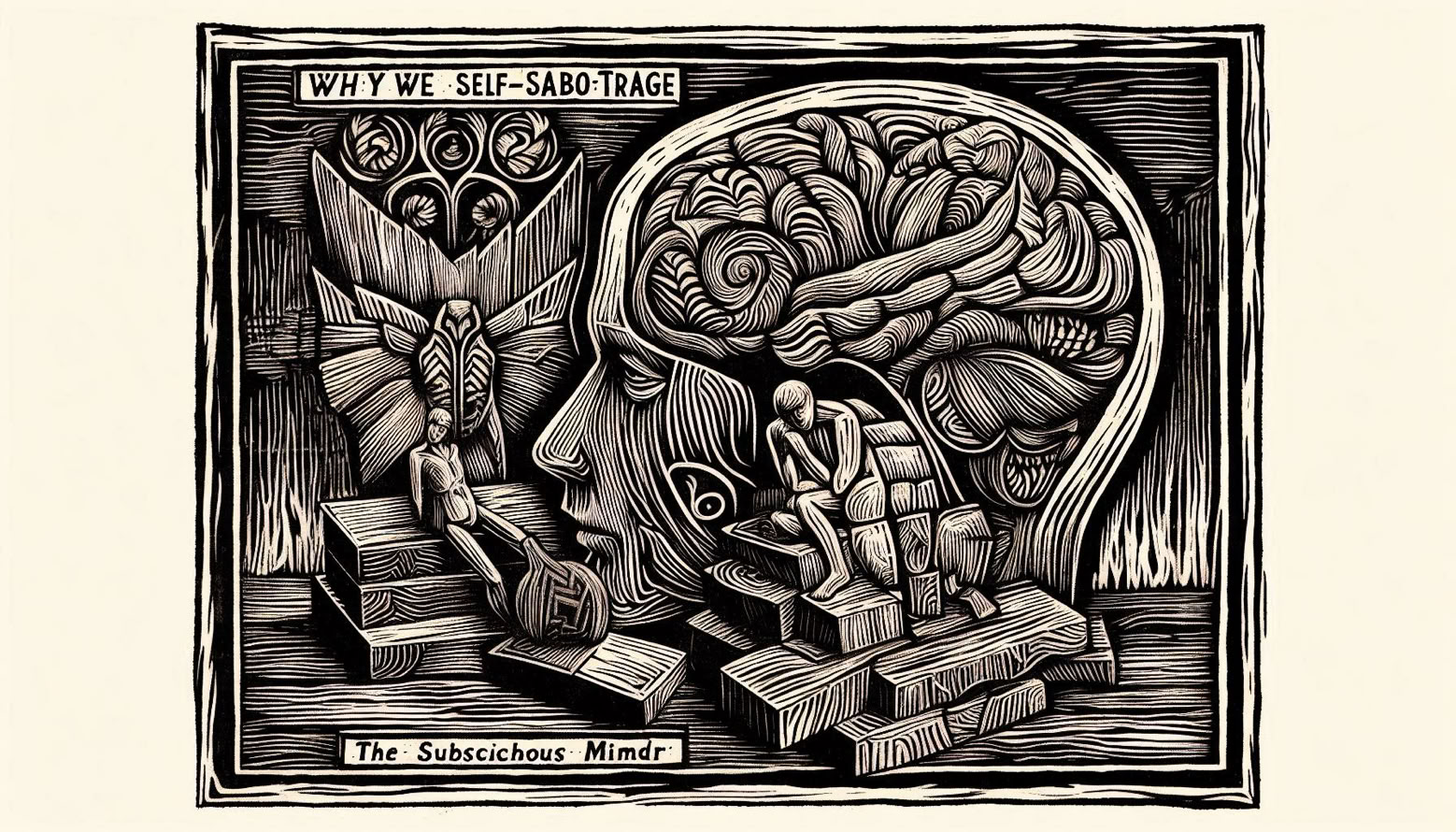
What looks like self-sabotage is actually self-protection. Your subconscious mind isn't trying to ruin your life - it's trying to keep you safe. The problem is, it's using outdated information and seeing danger where there isn't any.
Your Subconscious Is Overprotective (And a Bit Paranoid)
Your subconscious mind has one job: keep you alive and safe.
It does this by remembering everything that's ever hurt you, scared you, or went wrong. Every rejection. Every failure. Every time you tried something new and it didn't work out. Every time you trusted someone and they let you down.
It files all of this away as evidence: "This is dangerous. Don't do this again."
Then, years later, when you're about to do something that even vaguely resembles those past experiences, your subconscious panics. Warning bells go off. Red flags everywhere. And it does whatever it takes to keep you from repeating the "mistake."
Even if the "mistake" is trying to be happy.
The Comfort Zone Isn't Comfortable - It's Just Familiar
Here's the thing about comfort zones: they're not actually comfortable. They're just familiar.
You might be miserable in your current job, relationship, or situation. But it's known. Predictable. Your subconscious understands the rules of this particular hell.
Change - even positive change - is unknown. Unpredictable. Your subconscious doesn't know the rules. And if it doesn't know the rules, it can't keep you safe.
So it keeps you stuck. Not because it hates you, but because it's terrified of what might happen if you leave.
Examples of this in action:
You stay in a mediocre relationship because being alone feels scarier
You don't apply for the promotion because what if you fail?
You sabotage your weight loss because being invisible feels safer than being seen
You pick fights when intimacy gets too close because vulnerability feels dangerous
Your conscious mind knows these things don't make sense. Your subconscious doesn't care about sense - it cares about survival.
When Past Pain Blocks Future Growth
Your subconscious remembers everything. Especially the painful bits.
That time you were rejected. That time you failed publicly. That time you trusted someone and they hurt you. That time you were vulnerable and it was used against you.
Those experiences aren't just memories. They're warnings, tattooed into your subconscious: "Don't do that again. It hurt last time."
So when you're about to try something similar - even if the circumstances are completely different - your subconscious hits the panic button.
What this looks like:
You were criticised as a child, so now you avoid anything where you might be judged
A past relationship ended badly, so you sabotage new ones before they can hurt you
You failed at something once, so you don't try new things anymore
Someone shamed you for your weight, so you sabotage your own health goals
The pattern isn't random. It's protection. Misguided, outdated protection - but protection nonetheless.
Why Willpower and Logic Don't Work
You can't logic your way out of subconscious patterns.
Your conscious mind can understand perfectly well that this relationship is different, this job is worth trying for, this change is good for you. But your subconscious isn't listening to logic. It's listening to past pain.
Willpower doesn't work either. Because you're not fighting laziness or weakness. You're fighting a part of your mind that genuinely believes it's saving your life by keeping you stuck.
You can white-knuckle it for a while. Force yourself to push through. But eventually, the subconscious wins. Because it's stronger, faster, and it doesn't get tired.
How Self-Sabotage Actually Shows Up
Self-sabotage isn't always obvious. It's rarely dramatic. It's the small things that add up:
Procrastination: Putting off the thing you know you should do until it's too late or the opportunity passes.
Picking fights: Creating conflict right when things are going well, pushing people away before they can leave.
Perfectionism: Setting impossible standards so you have an excuse not to try or finish.
Self-destructive choices: The cigarette after months of quitting. The binge after weeks of healthy eating. The impulsive decision that undoes your progress.
Negative self-talk: Convincing yourself you can't do it, you're not good enough, it won't work anyway.
Staying busy: Filling your life with distractions so you never have to face the thing you're actually afraid of.
None of this is conscious. You're not deliberately choosing to sabotage yourself. Your subconscious is running the programme in the background, and you're just experiencing the results.
Rewriting the Programme
Here's the good news: you can update the subconscious programming.
You can't do it through willpower or positive thinking alone. But you can do it by working directly with the subconscious mind - which is exactly what hypnotherapy and NLP are designed for.
How Hypnotherapy Helps
Hypnotherapy lets us access the subconscious mind - the part running the self-sabotage programme - and update it.
We can:
Identify the specific experiences that created the pattern ("I'm not safe if I succeed," "Vulnerability equals pain," "Change means danger")
Release the emotional charge attached to those old experiences
Reframe the beliefs they installed
Teach your subconscious that you're safe now, even when things change
Build new patterns that actually support your growth
In the deeply relaxed state of hypnosis, your subconscious is open to new information. We can introduce new beliefs, new responses, new ways of seeing yourself and the world.
Not through force. Through gentle reprogramming.
How NLP Helps
NLP works with the language and patterns your mind uses to create your reality.
Through NLP, we can:
Identify the specific thought patterns driving the self-sabotage
Interrupt those patterns before they take over
Create positive anchors you can use when the old patterns trigger
Reframe how you perceive yourself and your abilities
Change the sensory qualities of negative thoughts so they lose their power
Both hypnotherapy and NLP work with the subconscious mind. They speak its language. They don't try to override it with logic - they update the operating system so the sabotage programme stops running.
What Changes Look Like
The shifts are often subtle at first.
You might not notice anything during the sessions. But then, weeks later, you realise: you didn't procrastinate on that deadline. You didn't pick a fight when things got close. You made a healthy choice without overthinking it.
And here's what I tell clients: I don't know whether it'll be in a week, a month, or a year, but one day you'll suddenly realise you're not sabotaging yourself anymore. The pattern just... stopped. You didn't even notice when it left.
The subconscious updated its files. It learned that change doesn't equal danger. That success won't destroy you. That you can be vulnerable without being hurt.
And the old protective behaviours simply aren't necessary anymore.
This Isn't About Fixing Yourself
You're not broken. You don't need fixing.
Your subconscious has been doing its job - keeping you safe based on the information it has. The problem is, it's working from outdated data.
Understanding self-sabotage as protection rather than failure changes everything. It shifts you from self-criticism ("Why do I keep doing this?") to self-compassion ("What am I protecting myself from?").
From there, you can work with your subconscious rather than fighting it. You can update the programme. You can teach it that you're safe now. That growth won't destroy you. That you can handle change.
And slowly, the sabotage stops. Not because you forced it to. Because it's no longer needed.
Want Monthly Insights + Free Guided Audio?
Join my newsletter for hypnotherapy tips, mental health first aid, and a free guided meditation each month.
If you recognise these patterns and you're tired of getting in your own way, hypnotherapy can help you understand what's driving the sabotage and release it at the root. Get in touch to book a free consultation.